Overview
Living in Alberta
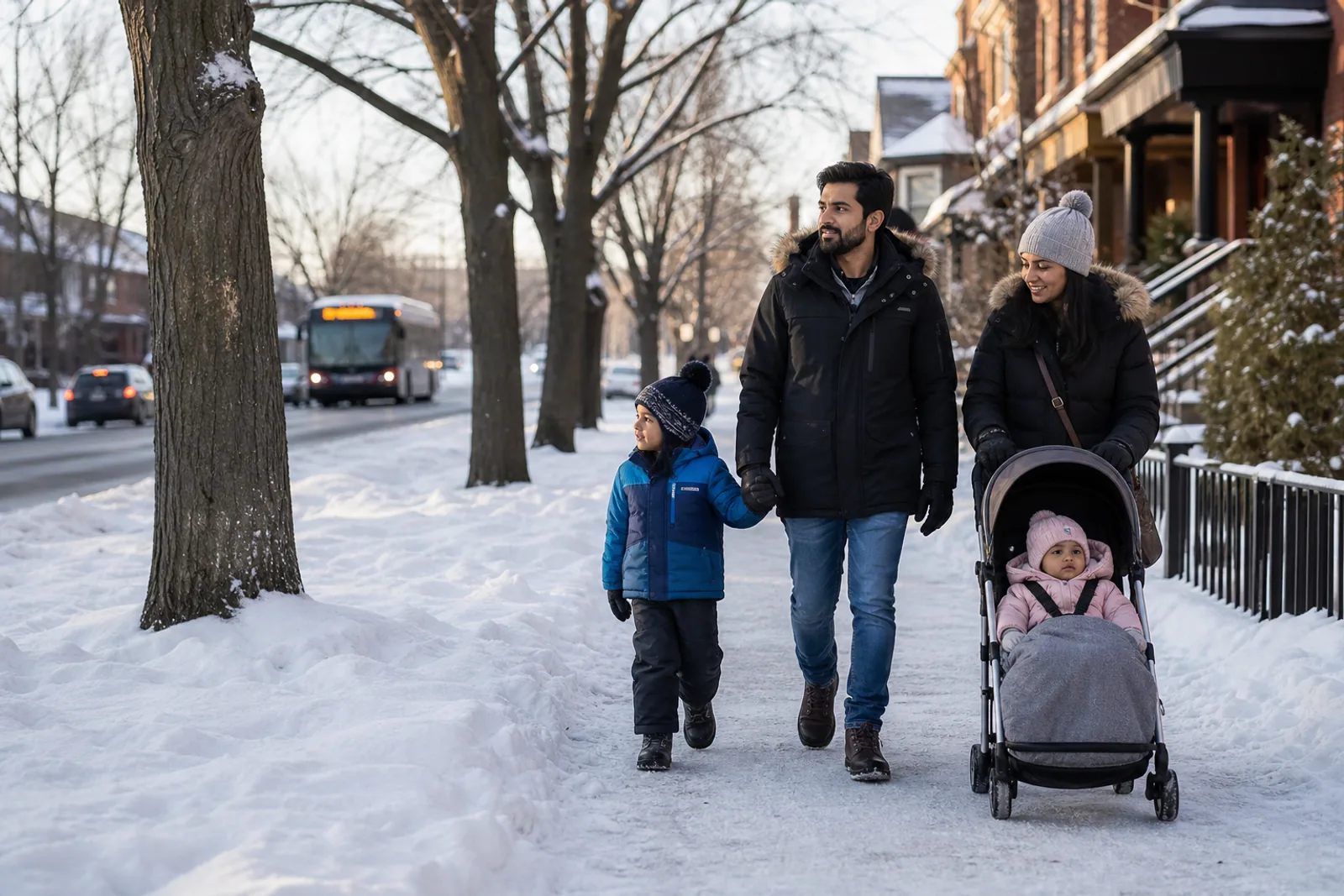
Daily life in Alberta differs substantially between inner-city Calgary or Edmonton, car-oriented suburbs, mountain towns and smaller prairie or northern communities. Choose the community using the household’s commute, school, health and support needs.
Housing and utilities vary by building
Ask whether heat, electricity, water and parking are included and inspect insulation, windows and heating equipment. Alberta tenancy law permits security deposits within provincial limits and does not use the same standard lease as every other province.
Mountain tourism communities can have unusually limited rental supply.
Register for health and education
Eligible residents apply for AHCIP and then use local primary-care attachment resources. Public, Catholic and Francophone school authorities operate under separate governance and attendance rules.
Bring vaccination, education and custody records for children.
Plan transportation by neighbourhood
Calgary’s CTrain and Edmonton’s LRT serve selected corridors, but many jobs and family activities require buses or a car. Smaller communities may have little or no evening service.
Budget winter tires, block-heater use where needed and higher insurance until Canadian history is established.
Use local newcomer networks
Settlement providers offer language, employment, school and community orientation in many regions. Cultural organizations and libraries can help beyond the initial appointment.
Emergency planning should include winter storms, wildfire smoke and extreme cold.

Frequently asked questions
Questions about living in alberta
Does AHCIP cover dental and prescriptions?
Not generally as universal insured services; employer or public supplementary programs may apply.
Is Calgary transit enough without a car?
It can be in selected neighbourhoods and commutes, but test the actual route and off-peak schedule.
Related guides