Overview
Moving to Saskatoon
Saskatoon combines universities and hospitals with mining, agriculture technology, manufacturing, construction and services. The South Saskatchewan River divides travel corridors, and growing suburban employment can make vehicle access important.
Use the university and resource-service economy
The University of Saskatchewan, health system and research facilities anchor education and science. Potash and uranium companies, agricultural technology, engineering, manufacturing and food processing add private-sector roles.
Some mine work is rotational and not located in the city.
Choose neighbourhood around river crossings
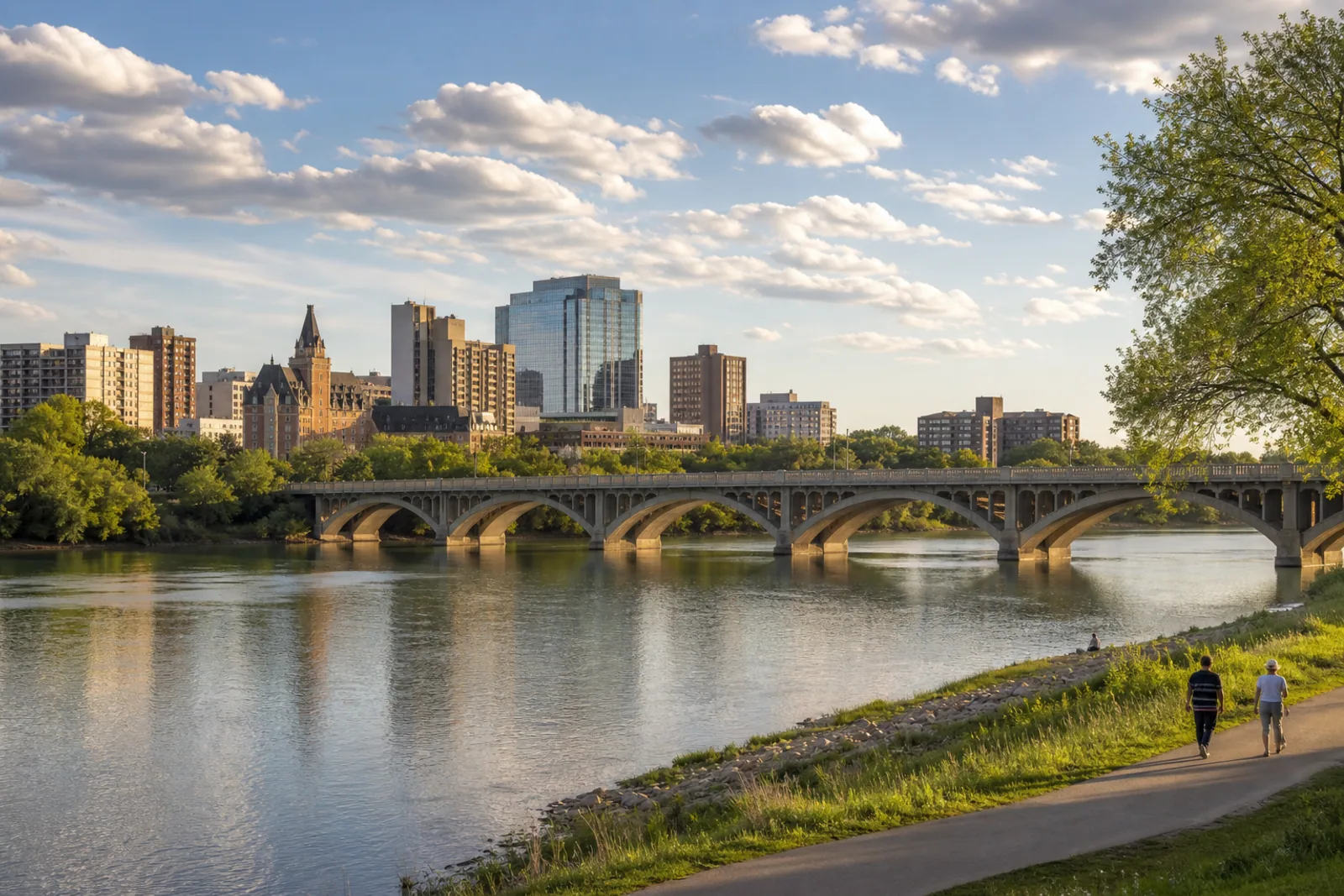
Bridges concentrate east–west travel, and suburban growth changes commute times. Saskatoon Transit serves the city, but outer industrial and shift jobs may require driving.
Test school and child-care trips as well as work.
Prepare for prairie climate
Winter is cold, dry and windy, while summers are warm with storms and wildfire smoke periods. Heating, vehicles and clothing need preparation.
River recreation is attractive but ice and water safety require local advice.
Connect in a growing newcomer city
Saskatoon has active newcomer, Indigenous, Filipino, South Asian, African and other community organizations. Settlement agencies and libraries help with language, work and schools.
Professional networks can be particularly important in specialized mining and research fields.

Frequently asked questions
Questions about moving to saskatoon
Are Saskatoon mine jobs inside the city?
Many corporate and service roles are, while actual worksites can be remote and rotational.
Does the river affect commuting?
Yes. Bridge crossings are a practical part of neighbourhood choice.
Related guides