Overview
Canadian citizenship ceremonies
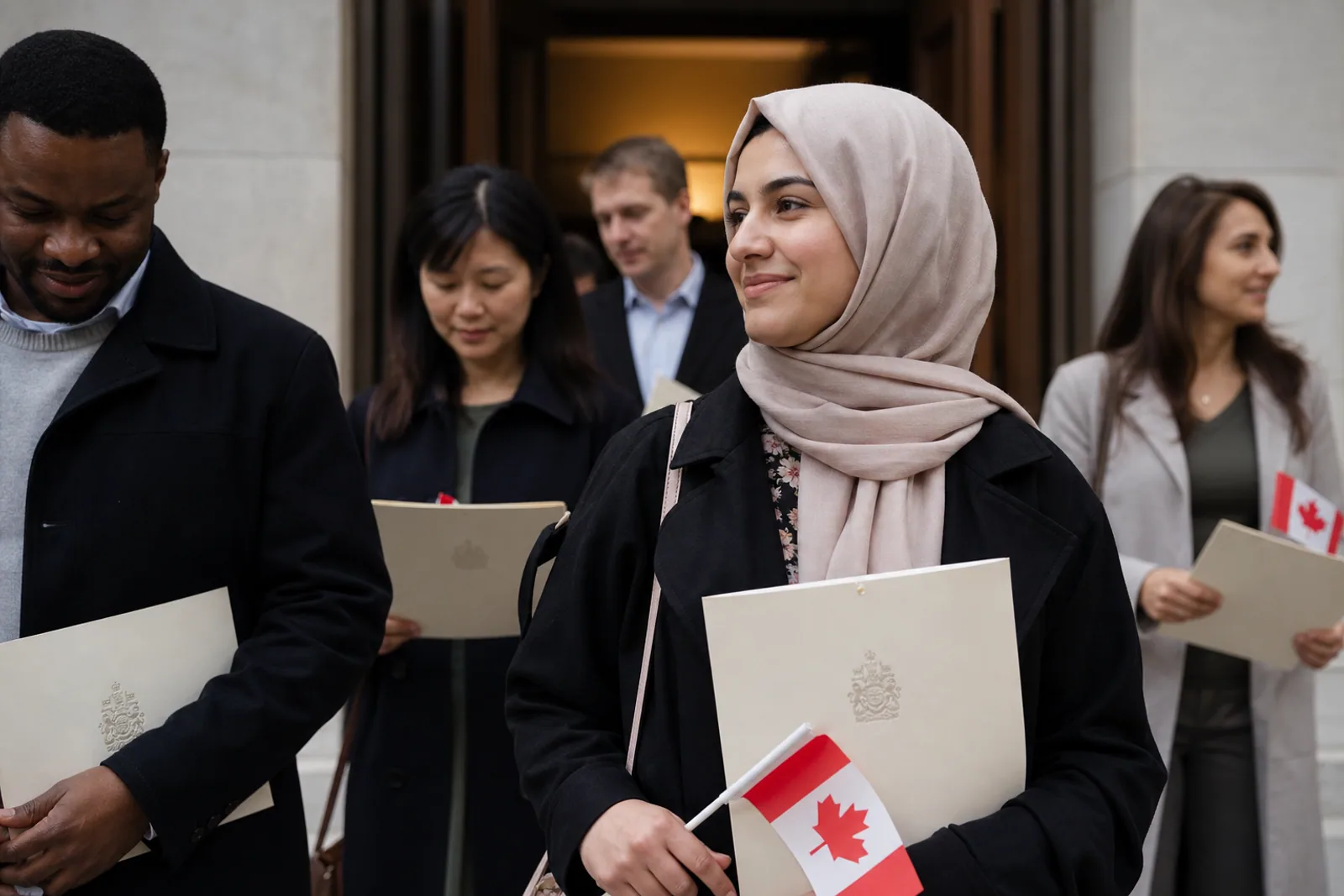
Most approved adult applicants become Canadian citizens only when they take the oath at a ceremony. The invitation explains identity, technology or venue, guests, PR-card handling and certificate delivery.
Follow the ceremony invitation
Confirm whether attendance is online or in person, the time zone and documents required. Request rescheduling immediately if a serious conflict prevents attendance; simply missing the event can delay or close the file.
Accommodation and waiver processes exist for qualifying needs.
Take the oath as directed
Participants repeat and sign the oath and must be physically present in Canada unless IRCC authorizes otherwise under applicable rules. The judge or official explains the legal significance.
A person does not become a citizen merely because the application was approved beforehand.
Deal with the PR card
IRCC instructs new citizens to surrender or destroy the PR card because PR status ends on becoming a citizen. Do not use it for later travel.
Keep the ceremony and certificate records securely.
Plan post-ceremony travel
The citizenship certificate is proof of status but is not a travel document. Apply for a Canadian passport before flying to Canada as a citizen, allowing sufficient processing time.
Update the Social Insurance record and other agencies after receiving proof.

When to get legal advice
When a ceremony issue may affect completion of citizenship: Canadian citizenship ceremonies
An immigration lawyer can assess a missed ceremony, urgent travel, changed eligibility fact or prohibition before the file is closed or further evidence is requested.
The applicant cannot attend the scheduled ceremony
A criminal charge arose after applying
Identity or residence information changed
IRCC warned that the application may be abandoned
A focused question may only need 15 minutes.
Use the time to identify the issue, any immediate risk and the next sensible step. If the matter needs more work, the lawyer can explain the proposed scope before you decide whether to proceed.
Read what an immigration lawyer can do and how an immigration law firm may handle further work.
Frequently asked questions
Questions about canadian citizenship ceremonies
When do I legally become a citizen?
For an ordinary adult grant, when the oath is taken at the ceremony.
Can I travel on the citizenship certificate?
No. It is not a passport or travel document.
Related guides